
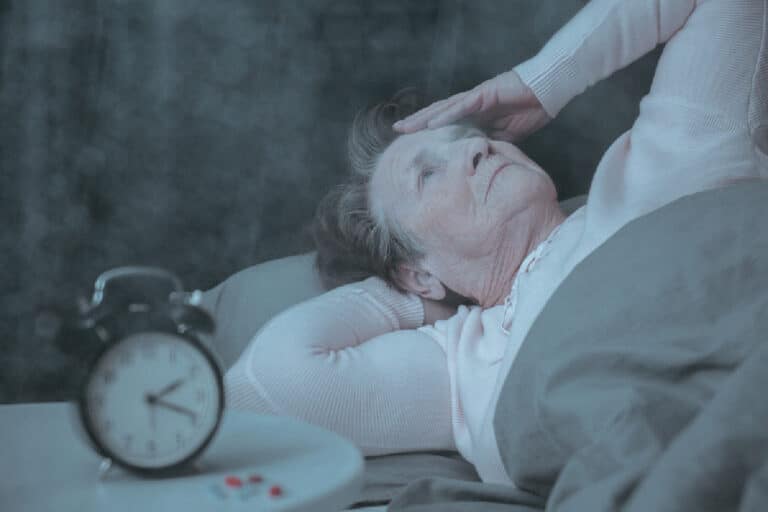
Companion Care at Home: No matter what age you are, you need healthy sleeping habits to survive.
As a senior’s body gets older, their sleeping habits may change, or they need help creating those healthy habits. Companion care at home provides friendship but also a way to get seniors to create healthy habits and stick to them by having someone remind them of their routine.
Sleep is essential for seniors because it allows their bodies to do the necessary repairs to keep living. When a senior gets less sleep than what is needed to function, it is called sleep deprivation. Some seniors may go through a short period where they do not sleep well, but that is not something that is highly concerning. The problem that causes concern is when sleep deprivation is ongoing.
Any adult with sleep deprivation will have some serious side effects from the lack of sleep. They will have poor cognitive function, increased inflammation, and a poor immune system. All of this can make other illnesses or chronic diseases worse or flare-up. There are five stages of sleep deprivation that companion care at home can help watch out for.
The First 24 Hours
Feeling tired or off from no sleep within 24 hours isn’t a major cause for concern. A senior may feel off or exceptionally tired the next day but it isn’t something companion care at home should fret over. If the senior can go to sleep the next night, it could have been a one-time thing.
After 36 Hours
After the first 24 hours of not sleeping when a senior is reaching 36 hours or more, the symptoms start becoming more intense. A senior might start experiencing microsleeps that last for 30 seconds or less. They may not even realize they are dozing off and it can be dangerous when living alone. This is something that companion care at home should notice.
After 48 Hours
At this point after no sleeping, it is a cause for concern and should be recorded by companion care at home. If the problem has not corrected itself a senior may even start to hallucinate things. 48 hours of no sleep can cause high stress levels, depersonalization, and extreme fatigue.
Awake for 72 Hours
Longer microsleeps tend to happen after 72 hours and the urge to sleep will be very intense. Companion care at home should encourage a senior to find a comfortable place and rest. A senior may start to experience illusions, depression, and disordered thinking.
Awake for 96 Hours
A senior may start experiencing sleep deprivation psychosis. This is where they are unable to interpret reality but typically goes away when a senior gets the right amount of sleep. If the sleep deprivation goes on longer than this it can be time to go to the doctor. The doctor may try the most natural ways possible first because sleeping aids can be dangerous for seniors. However, if the problems continue to get worse a doctor may prescribe a short-term solution.
Having companion care at home can be a huge help to keep an eye on your senior’s sleep habits and can help to find solutions.
For more information about hiring Companion Care at Home in San Diego, CA, call the friendly caregivers at La Jolla Nurses Homecare who can help your aging parents remain in their own homes, at 858-454-9339. We are a home care agency providing quality and affordable senior care in La Jolla, CA, and the surrounding communities.

Today we are the oldest and most experienced private duty agency in San Diego County.She saw a need for quality private duty home health care and she worked diligently to build an agency that filled that need.I am proud to say, her vision is carried on today with our dedicated staff.
I believe our tenure in the community speaks well for us.We have had the opportunity to be of service to countless interesting individuals, including local and worldwide celebrities.It is the people we care for that makes this a fascinating industry.Whether high profile or a more ordinary citizen, we are proud that thousands have entrusted us with their care or the care of their loved ones.Our Mission is to provide high quality, very secure and the most compassionate home health care.We believe that patients heal faster and are happiest when they can stay in their homes.”
- How Alzheimer’s Care Can Help Your Mom - April 23, 2024
- Ensuring Effective Communication Between Senior Care Team Members - April 17, 2024
- 10 Tips To Help Your Senior Parent Protect Their Teeth - April 10, 2024